
- friend of DIN and creator of the Polymorphic Organisation Bot
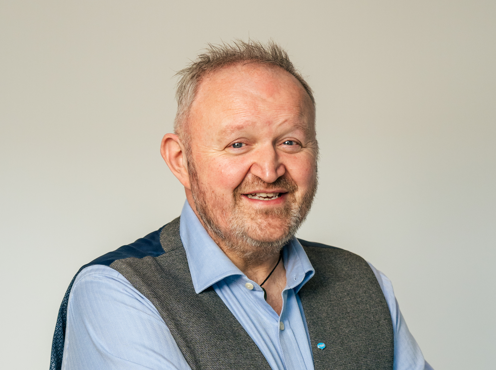
A message from Perry Timms
It's been great to run a couple of sessions with Helena leading, and with many of you recently. I have probably mentioned my work on Polymorphic Organisations, and now it's a chance for you to find out more and even play with the AI-driven space I've built for it.
Polymorphic Organisations began with a realisation and a frustration of mine:
The frustration was that progressive, self-managed, adaptive ways of working—more experimental, inclusive, and participatory—were not the dominant shape, form or flow I expected them to be when I first discovered this "genre" 20 years ago.
The realisation is that change is not what it used to be. It IS the work. Change isn't a programme, nor is it dressed up in its gala wear as transformation.
Those two things became a year-long writing habit: 37 chronicles on the Polymorphic Organisation. An enterprise designed to sense change and intentionally recombine its structures, skills and authority, while remaining recognisably itself..
So I set out to answer why organisations—especially those under the most pressure—find it so hard to change shape. Not change what they do. Change what they are.
If you work in housing, you already know the symptoms. Mergers that never quite bed in. Restructures that don't stick. And underneath it all, extraordinary people hold the whole thing together through sheer effort—covering for damp crises, safety backlogs and repair mountains that are really failures of design, not dedication.
I've come to call that last one both Absorption and Hero Debt. Loyal people always make up the systemic shortfalls in an organisation's design. Heroic leaders step in, shoulder incredible demands, and deliver. It's intoxicating, it's rewarded, and it's quietly destroying good teams. Because we should stop asking extraordinary people to compensate endlessly for ordinary design — and start making extraordinary capability an ordinary property of the system.
Then readers started asking the same thing: this is useful — but how do I actually do it? So I built Poly.
What Poly is — and isn't. Poly is not generic AI with a friendly face.
It's grounded in all 37 chronicles I've written thus far (over 100,000 words) and a deep synthesis of the people who've thought hardest about this - from Russell Ackoff and Stafford Beer to Robert Kegan, Mark Parker Follett and Jon Husband, alongside the current evidence from Deloitte, PwC and Gallup. It has a point of view. It won't flatter you or hand you management-speak - it'll name the concept that actually fits your situation and help you design a response.
And there's important context to note here (for the housing sector in particular): Poly doesn't tell you hyped up things like abolish your hierarchy or build a Skunk Works. It's disciplined about where structure must stay - safety, regulation, tenant protection - and where it can safely flex. Fluidity without discipline is how good organisations drift into hidden hierarchy and exhausted ambiguity. Poly knows the difference. So do you.
And there's important context to note here (for the housing sector in particular): Poly doesn't tell you hyped up things like abolish your hierarchy or build a Skunk Works. It's disciplined about where structure must stay - safety, regulation, tenant protection - and where it can safely flex. Fluidity without discipline is how good organisations drift into hidden hierarchy and exhausted ambiguity. Poly knows the difference. So do you.
What you can actually do with it:
- Think out loud about a real situation — a merger, a stalled restructure, a team running on heroics — and co-design a way forward, live.
- Run a diagnostic — the Sustainable Performance Ecology scores where your system is thriving and where it's stuck, across self, situation, social, system and synergy.
- Test an idea — the "Is my idea Polymorphic?" validator gives you a score and a challenge, not a gold star.
- Facilitating a session? There's an espresso-consulting mode built for exactly that — presentation-ready, on the spot.
It's free to explore - you just sign in with your email and a password.
Do have a play: https://polymorph-insight-hub.lovable.app/.
Your data remains yours, but be careful (as with any LLM) about what you share. Email/Password access controls, but it's still worth keeping real information and certainly others' data out of the system.
I'm opening this up to the Disruptive Innovators Network first, on purpose - you're the people most likely to stress-test it in the best way. A membership is coming sometime soon, and DIN members will get founding and open access throughout 2026 and into 2027.
For now, I'd just love you to go and use it, and tell me what you find. Because the opposite of a brittle organisation isn't a stable one. It's a Polymorphic one.